
THÔNG TIN ĐĂNG KÝ










Tư vấn chuyên môn bài viết
Đội ngũ Bác sĩ Up Dental
100% tốt nghiệp Đại học Y Dược
Được đào tạo chuyên sâu về niềng răng
Tư vấn ngayNiềng răng là phương pháp chỉnh hình răng hàm mặt giúp cải thiện các khuyết điểm răng miệng, mang lại hàm răng đẹp, nụ cười tự tin. Tuy nhiên, trên thực tế vẫn có nhiều ca niềng răng bị biến chứng bởi nhiều nguyên nhân khác nhau. Cùng Up Dental tìm hiểu nguyên nhân và cách khắc phục nhé.
Orthodontic treatment (braces) uses a system of wires, brackets, elastics, appliances, or clear aligners to apply force to the teeth, straightening them and establishing a more correct position on the dental arch. Most people will have a more beautiful smile after orthodontic treatment. However, in some cases, choosing to have braces at an unreliable or unspecialized dental clinic can lead to several problems:
Normally, the tooth root is located within the jawbone; however, in cases where the bone is thin or the tooth is significantly misaligned, the root may be displaced outward or inward depending on the degree. In these cases, it is recommended to move the tooth slowly and cautiously to avoid the root being dislodged from the jawbone. Alternatively, early detection is necessary to change the torque direction to rotate the root back into place.
Therefore, if you notice any unusual protrusion or misalignment of your tooth roots that is visible to the naked eye, you should visit a dentist for examination and advice as soon as possible.
Orthodontic treatment involves bone resorption and bone formation to allow teeth to move and establish new positions. Bone resorption and root resorption can occur, especially in patients with underlying conditions such as asthma, or those with pre-existing short or pointed root lengths. It can also occur in patients with calcium and micronutrient deficiencies; pre-existing gingivitis or periodontitis before and during orthodontic treatment…
If the condition is within acceptable limits and the patient pays closer attention to oral hygiene, these teeth can still function well and last a long time. However, if you notice a significant decrease in tooth height, alveolar bone volume, and surrounding bone volume, you should visit your dentist for examination and advice as soon as possible.
The priority during tooth movement is to establish the midline of the upper jaw coinciding with the midline of the face. Ideally, the midline of the lower jaw should coincide with the midline of the upper jaw.
However, for individuals with congenital facial asymmetry, such as a deviated nose, deviated chin, or deviated lower jaw, determining the midline of the face may be subject to error. In some cases, depending on the pre-orthodontic bone and tooth condition, asymmetrical tooth extraction may be necessary to resolve bite issues. In such cases, the standard for completing orthodontic treatment will be that the midline of the upper jaw coincides with the midline of the face, while the midline of the lower jaw allows for a relatively slight deviation from the upper jaw's midline to ensure both aesthetics and the priority of establishing proper bite alignment. (For example, in some cases, the dentist may recommend extracting a single incisor to resolve a bite issue.)
If the midline of the upper jaw is significantly misaligned with the midline of the face, and this is not due to the reasons mentioned above, then the orthodontic treatment is considered not yet complete. You can discuss this with your doctor for an early check-up and consultation.
After orthodontic treatment, gum recession or gingival sulcus may occur in some areas due to gingivitis, periodontitis before and during braces, or due to crowding of the anterior teeth, thin and narrow gingival tissue, and a lack of gingival tissue combined with the tooth movement forces of the braces. This is sometimes unavoidable; the key is for the orthodontist to anticipate this and inform the patient in advance so they are psychologically prepared to undergo additional treatments or consider other options besides braces.
A few minor gum recessions, within acceptable limits, will not affect the outcome of orthodontic treatment or the function of the teeth. However, if you notice excessive gum recession leading to loose teeth or prolonged sensitivity, you should visit your dentist for examination and advice as soon as possible.
If you experience this, you should inform your doctor as soon as possible for examination and diagnosis of the cause. If the pain is related to the temporomandibular joint, you may be advised to undergo a more in-depth examination to determine the cause and receive appropriate treatment, such as adjusting the position of the two jaws or using a muscle relaxant.
[cta-braces-tea]
>> See more:
Results of braces after 1 month : Changes and things to note.
Free orthodontic consultation at Up Dental Clinic
The dentist is a crucial factor in determining the success of an orthodontic treatment. Therefore, if you choose to have braces fitted by a dentist who lacks expertise and experience, they may create an incorrect treatment plan.
Besides the dentist's skill, facilities and equipment are also factors affecting the outcome of orthodontic treatment . Dental clinics with low-quality equipment will not be able to accurately assess the patient's pre-treatment dental condition, leading to inaccurate treatment plans by the dentist.
.jpg)
Poor-quality orthodontic devices such as brackets, wires, and aligners may contain harmful substances that cause inflammation and health complications. Furthermore, low-quality devices may not apply sufficient force to the teeth, affecting the orthodontic treatment results.
After getting braces, you need to visit the dentist every month for check-ups, to monitor the condition of your teeth, and to adjust the tightening force to move your teeth into the correct position. Therefore, if you frequently miss your check-ups, don't apply enough force to move your teeth, or suffer from oral problems such as gingivitis or periodontitis that are not treated promptly, it will affect the orthodontic treatment process and your oral health.
When wearing braces, the brackets and wires attached to your teeth make oral hygiene more difficult because food easily sticks to the teeth and brackets. If you don't clean them properly, it creates a breeding ground for bacteria, increasing the risk of oral diseases such as cavities, gingivitis, and periodontitis. In addition, frequently eating foods that are too hard or too chewy can cause the brackets to fall off or break. These two factors are also among the reasons why braces can become damaged.
When you notice signs that your braces are malfunctioning, you should follow these steps:
If you are undergoing orthodontic treatment and notice signs of damaged braces, you should visit a dentist for examination to determine the cause and develop a treatment plan to fix the problem promptly.
If your braces are damaged due to a mistake by your dentist, you should find a reputable dental clinic to ensure the dentist is highly skilled and professional enough to fix the problem.
After orthodontic treatment, if your teeth don't improve or become more misaligned, you should visit a dentist to find the cause and a solution. If you are unsure about the dentist's skills or the facilities, you can find a more reputable dental clinic.
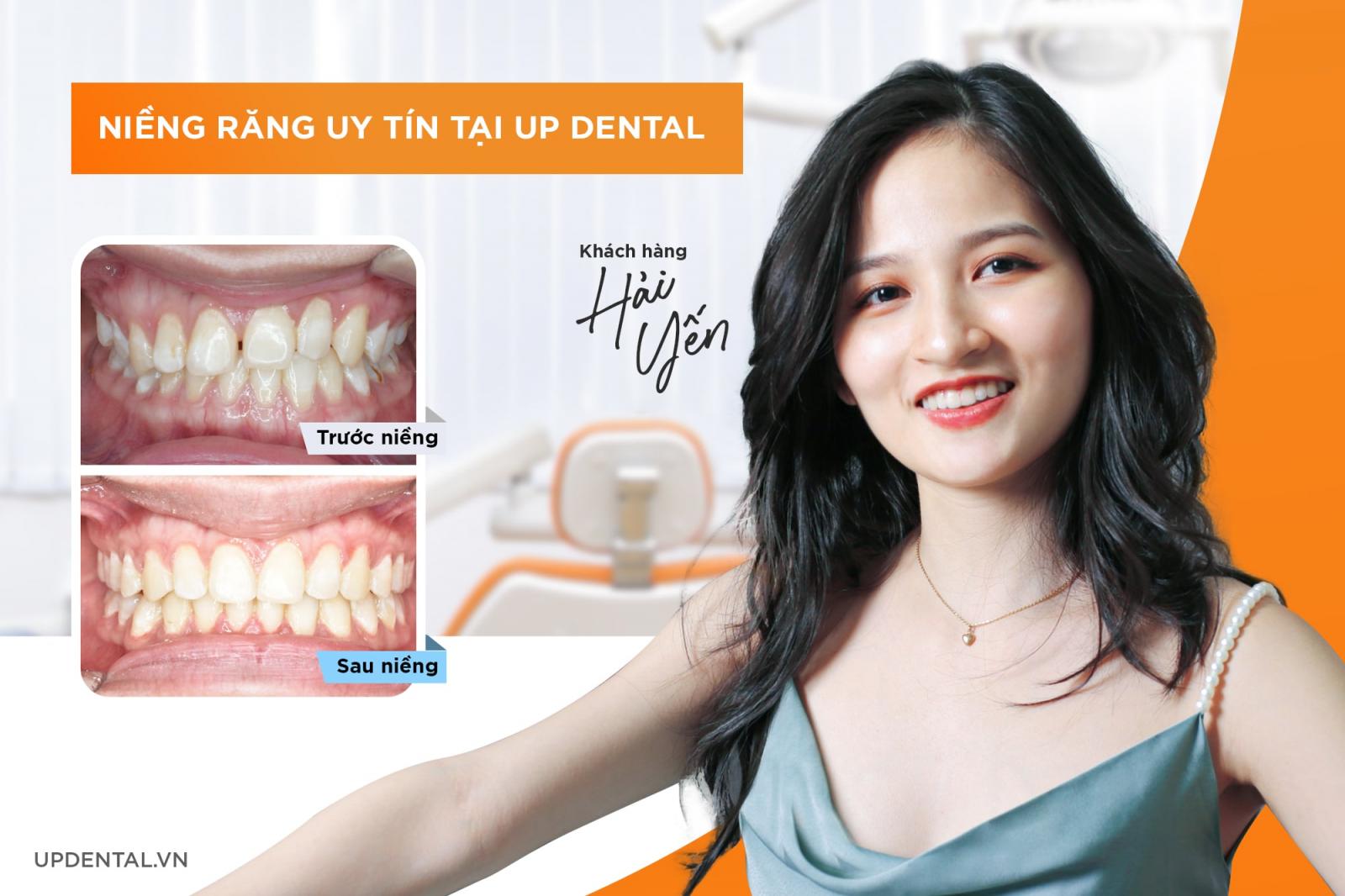
Up Dental, a specialized orthodontic clinic in Ho Chi Minh City, is one of the reputable orthodontic clinics you can choose.
With a team of doctors who are 100% graduates of medical universities, thoroughly trained in orthodontics, and possessing extensive expertise and experience, Up Dental's team has successfully helped approximately 15,000 customers achieve beautiful teeth and confident smiles. You can view customer reviews on the Fanpage "Up Dental Orthodontics" or the YouTube channel "Up Dental Orthodontics Clinic".
As a dental clinic specializing in orthodontics, Up Dental focuses on equipping itself with modern, specialized orthodontic equipment to assist doctors in accurately diagnosing dental conditions, thereby developing appropriate treatment plans, ensuring the orthodontic process is safe and highly effective.
>>>See more articles:
Our team of doctors are 100% graduates of medical universities and have received specialized training in orthodontics.
Address: No. 2 Vo Oanh Street, Thanh My Tay Ward, Ho Chi Minh City
Contact: 0901.327.278
Website: https://updental.vn
YouTube channel: https://www.youtube.com/c/NiengRangUpDental
Orthodontic Diary Group: https://www.facebook.com/groups/nhatkyniengrang
TikTok channel: https://www.tiktok.com/@updental01

Công ty cổ phần Up Dental
Giấy chứng nhận doanh nghiệp số: 0313476125 do Sở Kế Hoạch và Đầu Tư thành phố Hồ Chí Minh cấp ngày 22/10/2015
Giấy phép khám bệnh số: 10828/HCM-GPHĐ do sở Y tế thành phố Hồ Chí Minh cấp ngày 11/02/2025
Cơ quan quản lý trực tiếp: Sở Y Tế TP.HCM. Địa chỉ : 59 Nguyễn Thị Minh Khai, Phường Bến Thành, Quận 1, Thành phố Hồ Chí Minh 700000




![Niềng răng mắc cài kim loại giá bao nhiêu [10/2026] tại Up Dental](https://updental.vn/upload/image/article/large/2026/05/04/7e80eb62fb05b3751df3cc7564576738.jpg)
![Niềng răng bao nhiêu tiền. Bảng giá niềng răng Up Dental [10/2026]](https://updental.vn/upload/image/article/large/2026/03/06/69ce0a198b45f80ef50bac43cf15e7e7.jpg)